Casa del Postigo
La piel del tamborCasa del Postigo is the Bruner family residence in Seville, a house rescued from the family’s ruin by banker Octavio Machuca and made inseparable from the family’s history of obligation, loss, and waiting. Its rooms and tower preserve the private memory of Carlota Bruner and Manuel Xaloc, while Macarena Bruner’s defense of her family’s legacy gives the house’s past a continuing place in the present.
The House and the Bruner Family
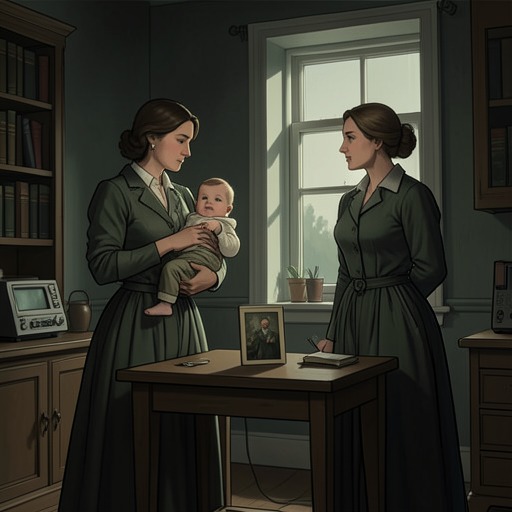
The residence survived the collapse of the Bruner family’s fortune through Machuca’s personal intervention. After the death of Rafael Guardiola y Fernández-Garvey, the duke consort and Macarena’s father, Machuca dealt with creditors and sold the few properties that had escaped seizure. He placed the resulting liquidity in his bank at the highest interest possible, preserving Casa del Postigo for the duke’s widow, Cruz Bruner, and securing an annual income intended to let her live with the decorum her name required.
That support was surrounded by rumor. In Seville’s closely connected upper circles, some people claimed that no annual income existed and that Machuca was paying Cruz from his own funds. Others suspected that his attachment to her had begun while her husband was alive. There were also unsubstantiated suggestions about Macarena’s parentage. No one produced evidence or dared confront Machuca, and his secretary Cánovas kept his characteristic silence about the banker’s private accounts and secrets. The house’s preservation thus rests on an act of rescue whose public account is entangled with suspicions that cannot be resolved.
Machuca’s Place in Macarena’s Life
Machuca’s connection to Casa del Postigo extended beyond its financial survival. He had known the dukes of Nuevo Extremo for forty years, stood as godfather at Macarena’s baptism in Seville Cathedral, and later escorted her down the same nave in a white satin dress to marry Pencho Gavira. Seville’s gossip described the marriage as Machuca’s arrangement: it protected his goddaughter’s patrimony and future while giving social advancement to Gavira, then an ambitious young lawyer rising rapidly through the Cartujano Bank.
The family residence therefore stands within a web of patronage as well as inheritance. Machuca’s aid preserved Cruz’s home, his influence shaped Macarena’s marriage, and his longstanding role in the family blurred the boundary between financial stewardship and personal attachment. The novel leaves the underlying rumors unproven, making the house a setting where intimate history remains partly hidden behind the public language of money, status, and family duty.
Carlota’s Tower and the Lost Correspondence
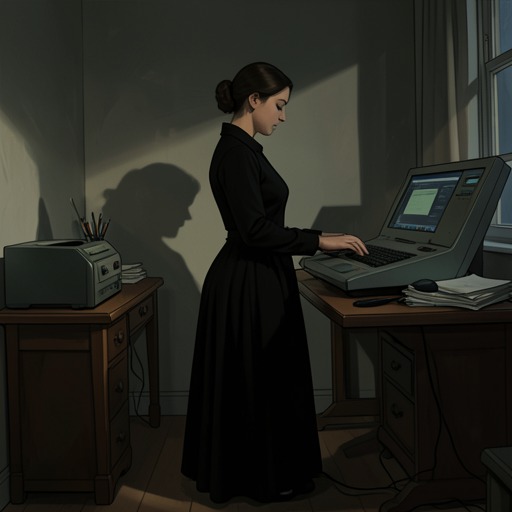
Casa del Postigo also contains the setting of Carlota Bruner’s long vigil for Manuel Xaloc, a sailor without fortune. According to Macarena, Carlota wrote him a letter or postcard almost every week for years after he emigrated to America. Her father, Macarena’s great-grandfather Luis Bruner, tried to prevent the correspondence by bribing the city’s postal officials. For six years, Carlota received no letters, and the family believes Xaloc received none from her either.
The house’s tower became the place from which Carlota watched the river for his return. Her letters imagine her climbing there during the siesta, sitting in a rocking chair while the household slept, and searching the river for the white sails that might bring Xaloc home. In the heat, she thought the painted galleons on the staircase had begun to move and took dreams of children playing on a beach as hopeful signs. These details make the tower at once a domestic refuge and the enclosure of a hope sustained without news.
When Xaloc eventually returned to find Carlota, she had lost her reason and could not recognize him. The thwarted letters and the waiting they prolonged turn the house’s elevated view of the river into an image of separation: Carlota could watch for a return but could not learn that her messages had been intercepted or that Xaloc had come back.
A House of Memory and Obligation
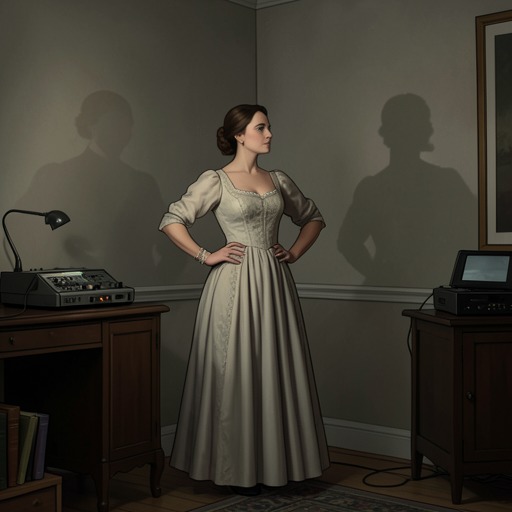
Macarena describes her own struggle as a battle against time and forgetting. Conscious that her family’s caste is disappearing, she says that she is defending her own space and intends to accept the end only after spending herself in defense of the things she loves. Those commitments include Nuestra Señora de las Lágrimas and Carlota’s memory. Casa del Postigo anchors that memory in a particular family home and in the tower where Carlota waited; the past is not merely inherited as a name, but held in rooms, letters, and a remembered view of the river.
The house’s significance is therefore distinct from the church Macarena also seeks to protect, yet bound to the same act of preservation. Both are threatened by the passage of time and by the disappearance of the world that gave them meaning. At Casa del Postigo, family care kept a residence standing after financial ruin; in its tower, a story of love survives even though its letters failed to reach their destination. For Macarena, remembering Carlota is part of fulfilling the obligations of the Bruner name, not an escape from the family’s decline.